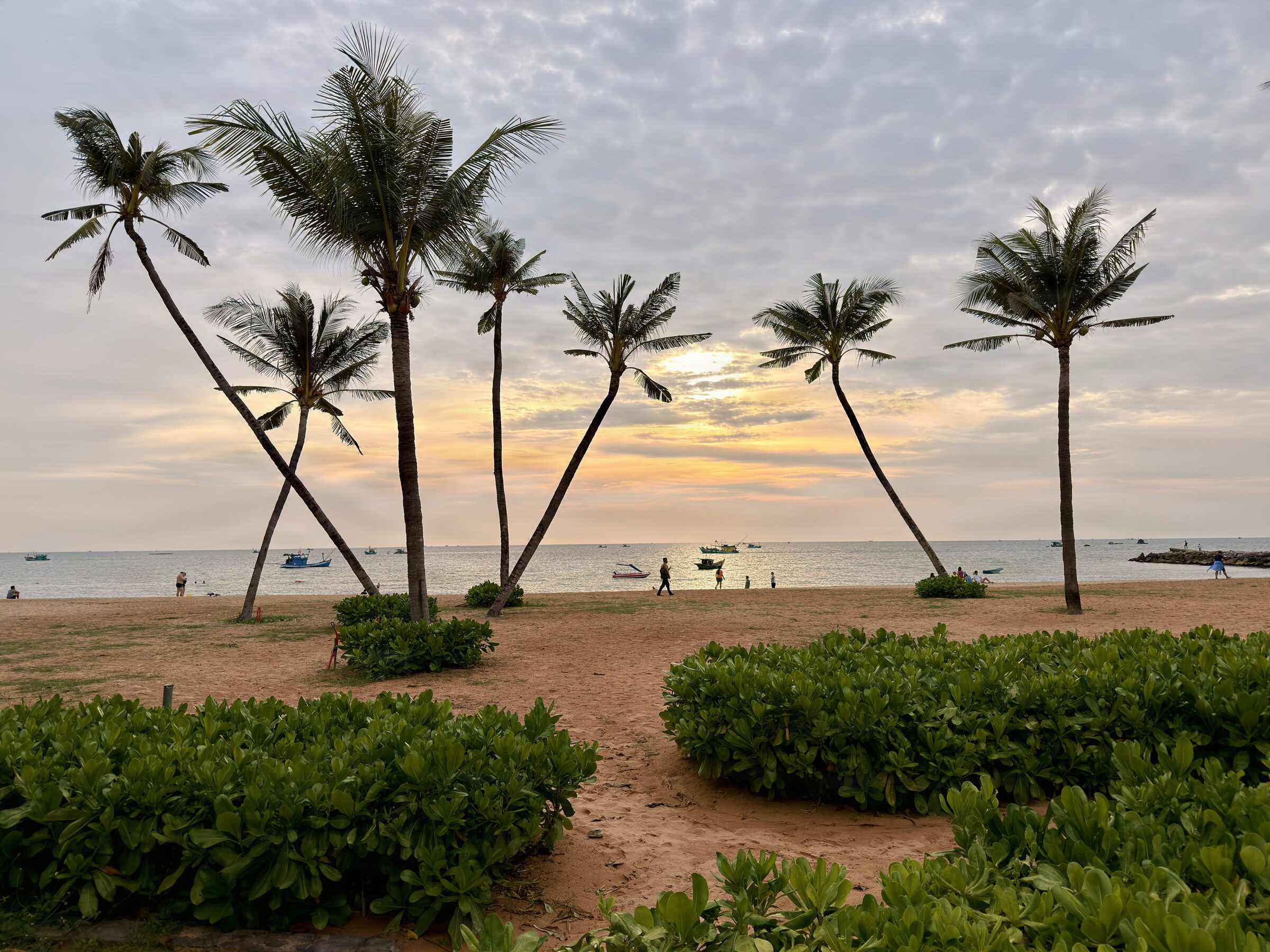
Phu Quoc is a popular tourist destination, but it has changed a lot in the last few years. We were excited to return, but the reality was disappointing.
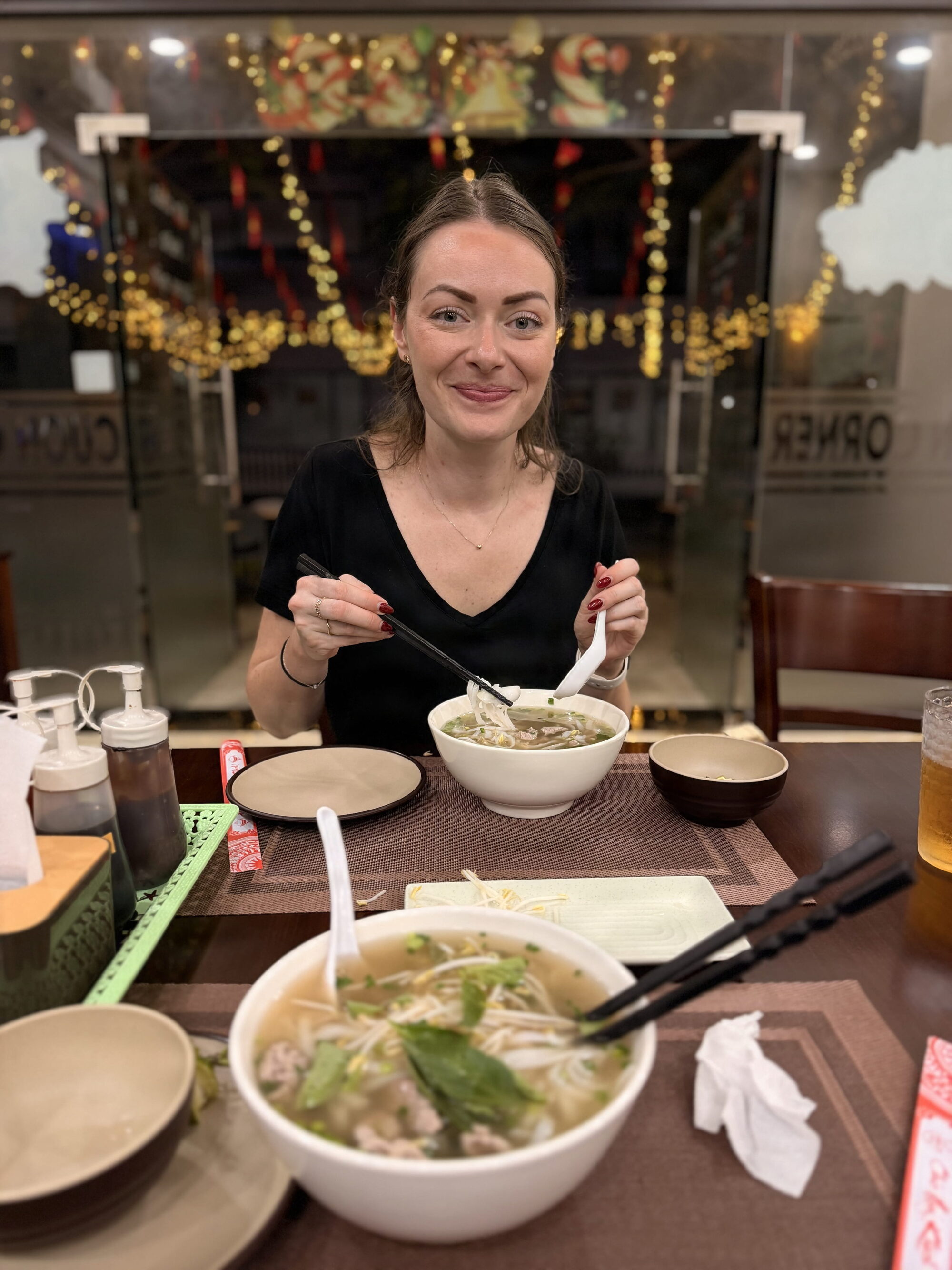
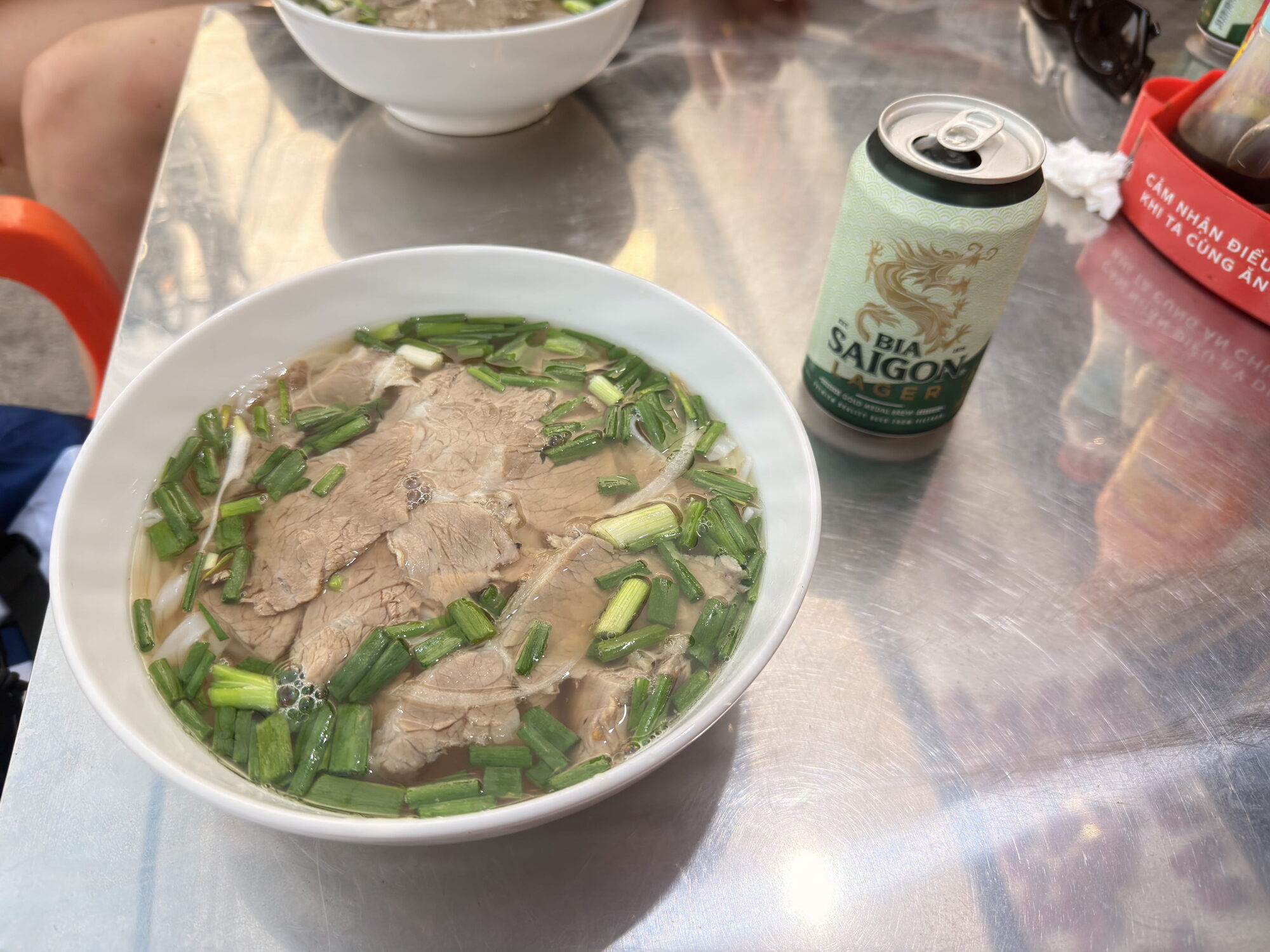
Even though Phu Quoc began as a blur of airports, our excitement was hard to contain. There were only two things on our minds during the seven-hour flight from Doha to Ho Chi Minh City: our first bowl of Phở and a cold beer at Blue Monkey BarBar116 Đường Trần Hưng Đạo, Khu Phố 7, Phú Quốc.
Since we had to change planes (and airports!) in Ho Chi Minh City, we had to go through immigration there. And if you, like us, have fallen victim to travel content on various social media platforms, you might have seen videos from the HCMC airport reporting 3 to 4 hours waiting times. The solution promoted everywhere? A fast-track queue — for a fee, of course.
Usually, we are not easily influenced by online horror stories, but with our connecting flight to Phu Quoc leaving just 3 hours after our arrival in Ho Chi Minh City, the thought of missing it (and delaying the two things we had been looking forward to most) suddenly made the €15 per person feel fairly reasonable.
We still didn’t love the principle of it. We found it quite uncomfortable paying extra just to make a normal airport process feel manageable, especially when the regular queue is left feeling like the punishment for not paying. Result? We were happy we got it because no joke - the reality looked like really min 3 hours of waiting time, whist our lane took 10 minutes
And we know, fast-track services exist in many airports around the world. Nothing new, nothing unusual. Also, sometimes there are simply too many planes landing at the same time. But in that moment, it was hard not to wonder whether the chaos was becoming part of the business model, especially when the paid solution was being promoted so heavily online.
It was our first small hint that in Vietnam, convenience was starting to come with a very visible price tag. We boarded our Sun Phú Quốc flight still full of excitement and expectations, ready to sit on a beach, explore some new parts of the island, and finally have that bowl of phở served straight from someone’s living room. Little did we know that it would be a very different experience this time. At least for the first few days.
A bit on Phú Quốc, and perhaps a little background on why we were so excited about it - and why we maybe should have done a tiny bit more research on how much the island had changed since our last visit.
For a long time, Phú Quốc was known for fishing, anchovies, fish sauce, pepper farms, small settlements, and island trade. Its location in the Gulf of Thailand also made it strategically important. Funny enough, distance-wise, the island is actually closer to Cambodia than to mainland Vietnam.
Then comes the darker layer: during Vietnam’s wars, Phú Quốc became associated with imprisonment and suffering through what is now remembered at Phú Quốc Prison. That history still sits there today, as well as in the Con Dao island we visited a few days later. It’s chilling and important reminder of the scars of the past.
The newest chapter is the loudest: tourism. Roads, expensive resorts, international arrivals, airport upgrades, cable cars, glossy developments, and Vietnam’s very visible ambition to turn Phú Quốc into a major holiday destination. And that part is working…
Now onto our little island history. When Alex and I started dating, Vietnam was our first bigger trip together, and we actually started here. This was where I met Eva and Roman, Alex’s long-time friends who have since become my good friends too. We spent a few days together laughing, playing games over beer, drinking Blue Monkey’s homemade schnapps, trying new food, and chatting on the beach. So when we arrived this time, we kept asking ourselves whether we had simply missed Phú Quốc’s reality the first time because we had such a great time. And maybe that was part of it.
While doing some research on the island’s development, I came across a 2023 article by IUCN, the International Union for Conservation of Nature, and which is very accurately describing the issues we noticed at a full glance. We won’t go into too many details, but rest assured, the problems described in this article are very much present, and in many places impossible to ignore - garbage, half-finished buildings that resemble ghost towns, excavators and building equipment scattered around almost on what felt like every available piece of land, massive luxury hotels along the coast, expensive beach bars that are charging a ridiculous amount of money for a beach bed (one place asked for 500k dong, cca €17, just for access which you could then “consume” by buying drinks. A small Saigon beer was 100k dong, which to put it into perspective, a normal price would be 25-40k dong) or fake tourist attractions that feel completely disconnected from Vietnamese culture or anything local, and are only serving one purpose - get money out of visitors.
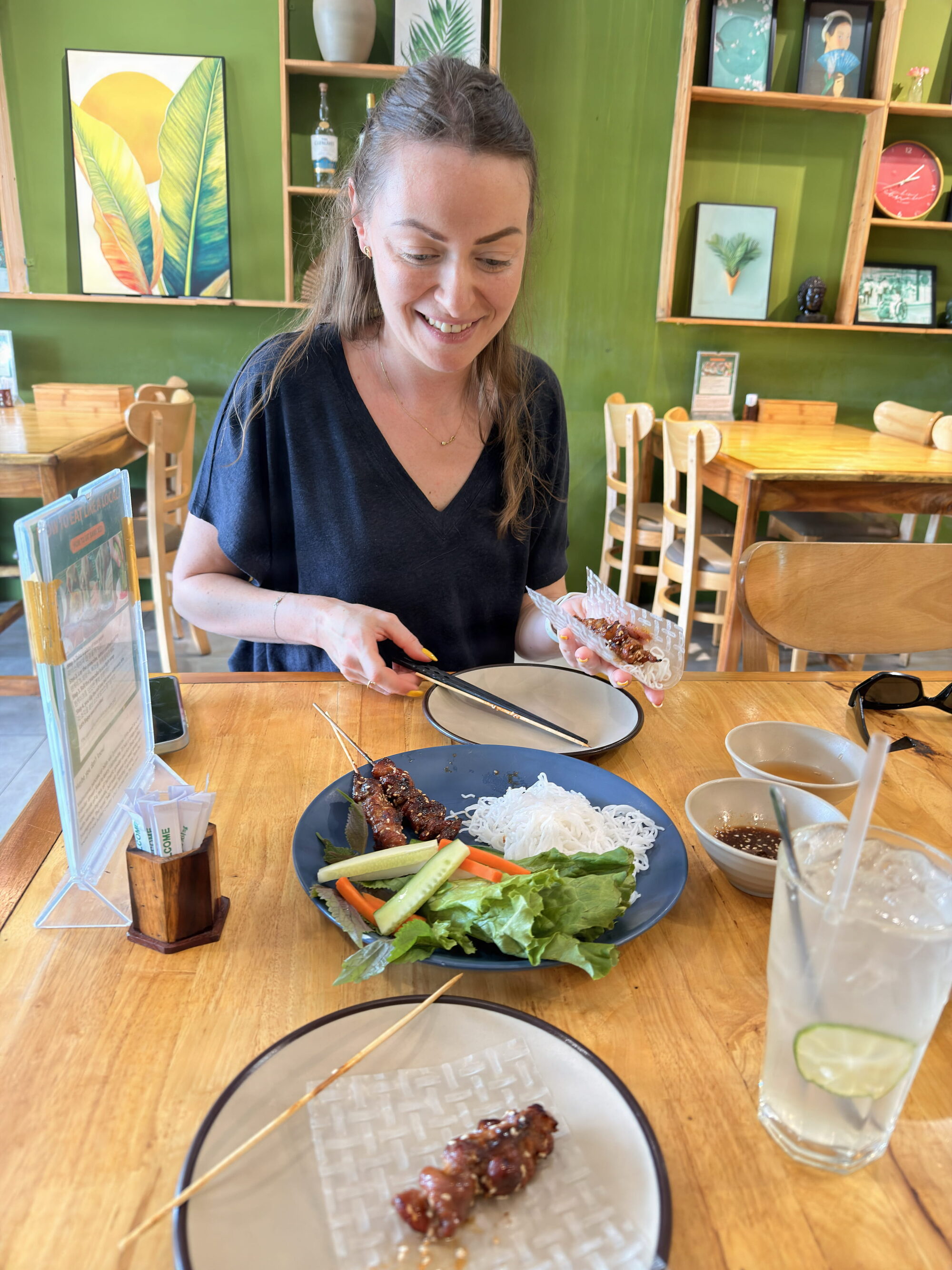
The restaurant landscape changed a lot too. There is plenty of Korean barbecue, Western food, Russian restaurants and bars, bubble tea, matcha places, and Vietnamese restaurants serving dishes at prices that feel very much adjusted to the tourist economy. Slowly but surely, the grandma’s-living-room kind of places, he ones with plastic chairs, handwritten menus, and the same recipe for 40 years, seem to be pushed out by souvenir shops and more tourist-adjusted concepts.
All of this added to the feeling that the island is no longer mainly trying to show you traditional Vietnamese culture. And perhaps that’s not what many people come to Phu Quoc for anymore. Maybe they come for the Pullmans and Sheratons, the InterContinentals and Hiltons, the comfortable pool, the avo toast breakfast, the beach club, the easy version of a tropical holiday. Fair enough. Sometimes people just want to rest in an air-conditioned pool bar with food that doesn’t surprise or offend.
But it did leave us wondering… When a place becomes so convenient, so international, and so carefully groomed, how much of the place itself is still left in the experience? You can say you’ve been to Vietnam and technically you did, but if most of what you experienced could have existed almost anywhere else where you have palm trees, a pool, and a fillet mignon dinner before the evening hotel show, then maybe the more honest question is: were you in Vietnam, or just on vacation somewhere far away?
it reminded us of Ha Long Bay three years ago, how disappointed and borderline angry we were seeing all the plastic trash floating from all the cruise ships. Now seeing some Instagram accounts promoting the 6 stars cruise ships as the ultimate experience to enjoy the bay, and that are probably producing probably more waste than all the small ones combined, if’s a bitter reminder of how important but rare mindful and sustainable tourism is.
Hot take, we know, and not one we are making from a moral high horse - we also like to enjoy comfort, cocktails, nice hotels, and the occasional very non-local breakfast or dinner. But Phu Quoc made us think about where the line between tourism making a place easier to enjoy, and tourism making a place hard to recognise is. We have more thoughts on this in the article here, and would love to hear your take on the topic!
Things we enjoyed
Now on a more positive note, there were things we loved, and would definitely recommend if you ever find yourself on the island (if they still exist by then… Ok, I’m done jabbing now. Mostly :D)
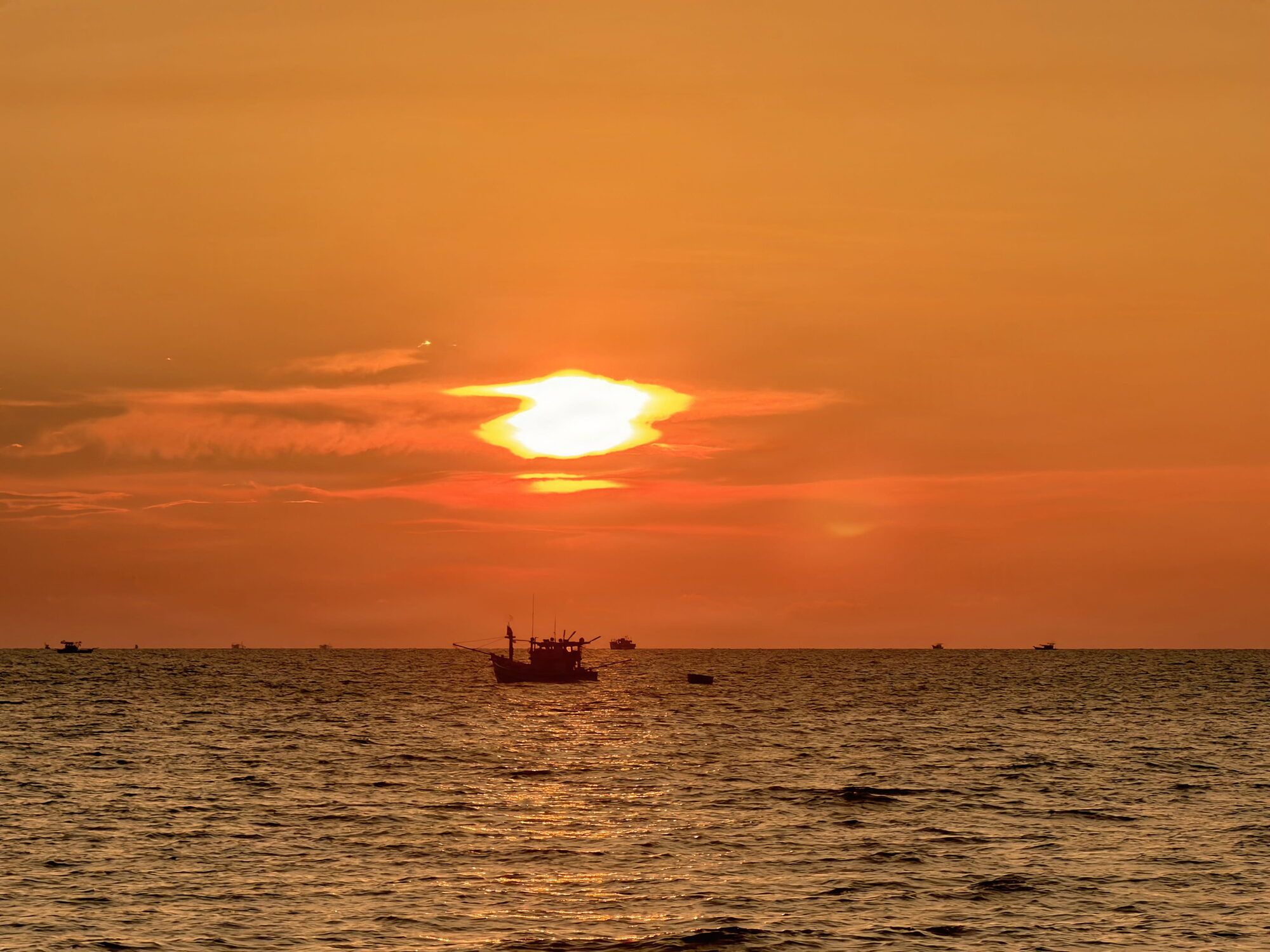
Hidden local sunset spots:
We were wandering through the ghost town (a mostly vacant complex of Western-style buildings in the south of the island) without morning coffee or breakfast, desperately trying to find a place that would serve some good old cà phê đá. Eventually, we stumbled across a cute French bakery serving Vietnamese coffee and French croissants. Good enough, we established.
The owner, a French gentleman who moved to Vietnam years ago, as we later learned, greeted us with a big, happy bonjour, and we started talking. We told him how we felt about the good, the bad, and the ugly of the island, he stayed with the good, complimented Alex for being from Austria because of Doppelmayr, the company behind the crazy long and famous Hòn Thơm cable car that the island prides itself in, and then recommended a very local beach place about a 20-minute walk down the promenade.
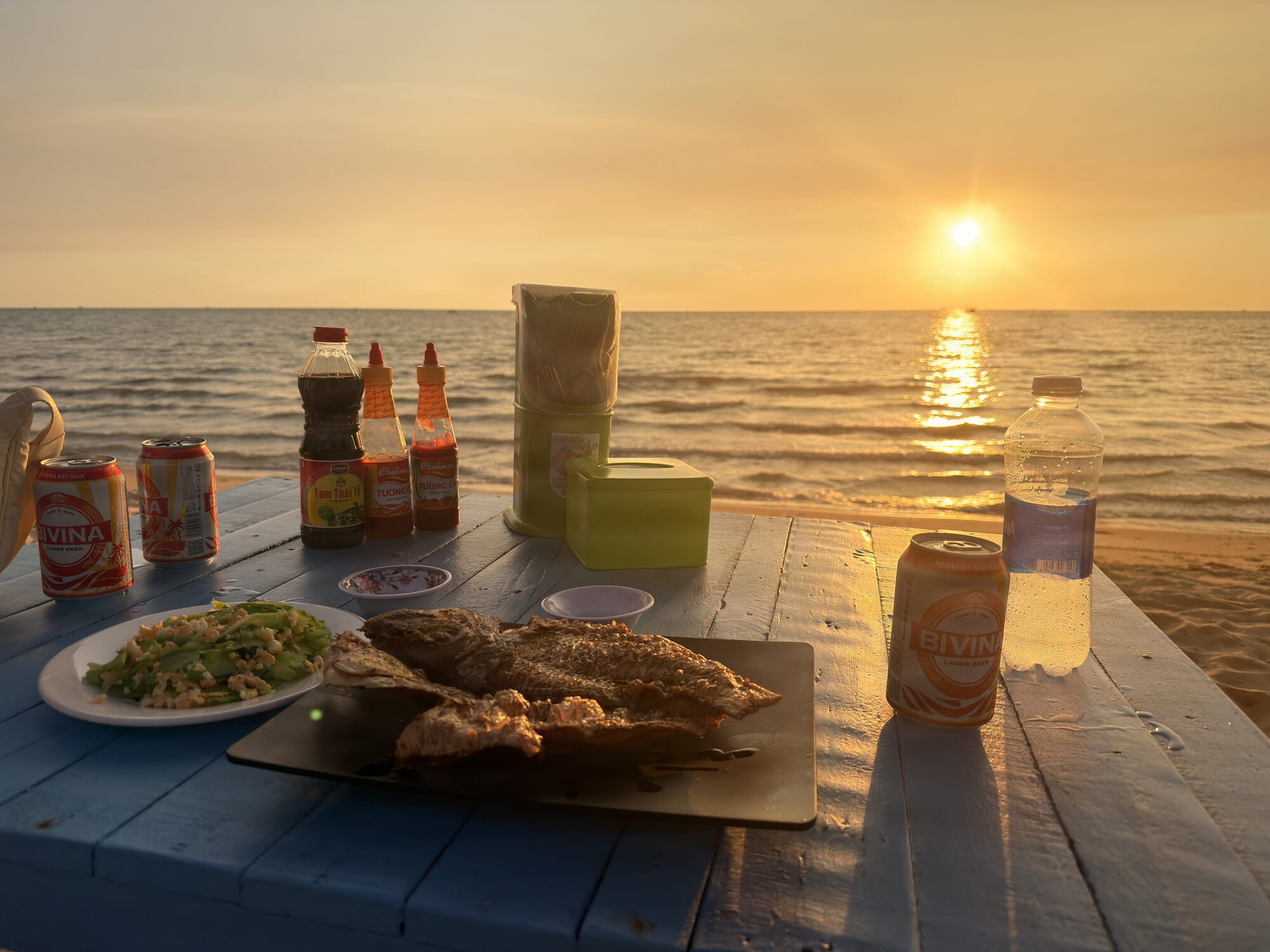
We checked Google Maps, saw they had local food and reasonably priced beer, and off we went. It ended up being exactly what we had been craving.
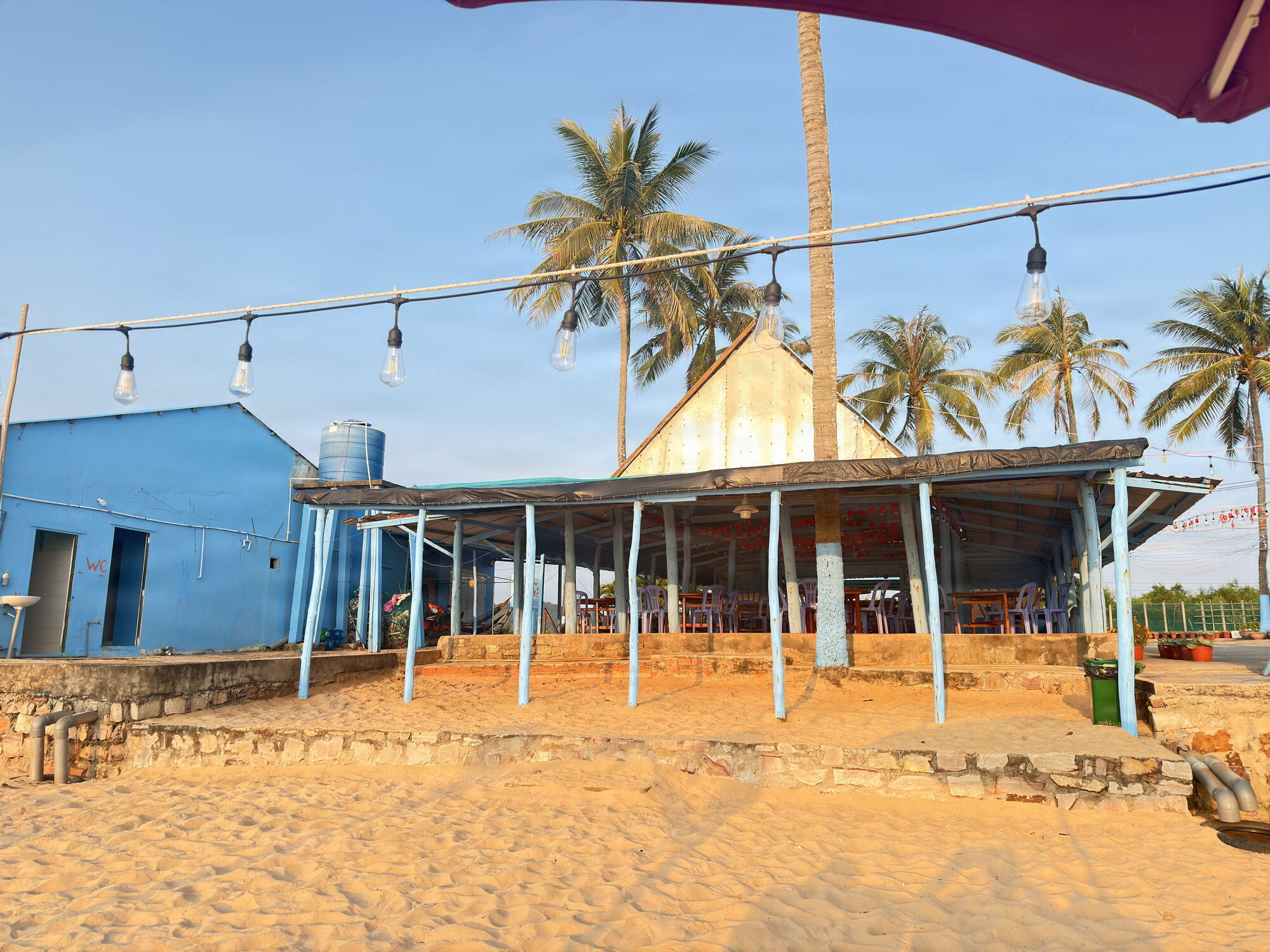
In what felt like the middle of nowhere, we saw two older Vietnamese-style buildings, three dogs playing together (always hard to say whether stray or domestic, but either way, it gave me a warm feeling) and smoke coming out of a chimney which suggested an open restaurant. Moving closer we saw a few plastic sunbeds, plastic chairs and tables, a few people eating and drinking, in the air a pleasant Vietnamese music. We were sold.
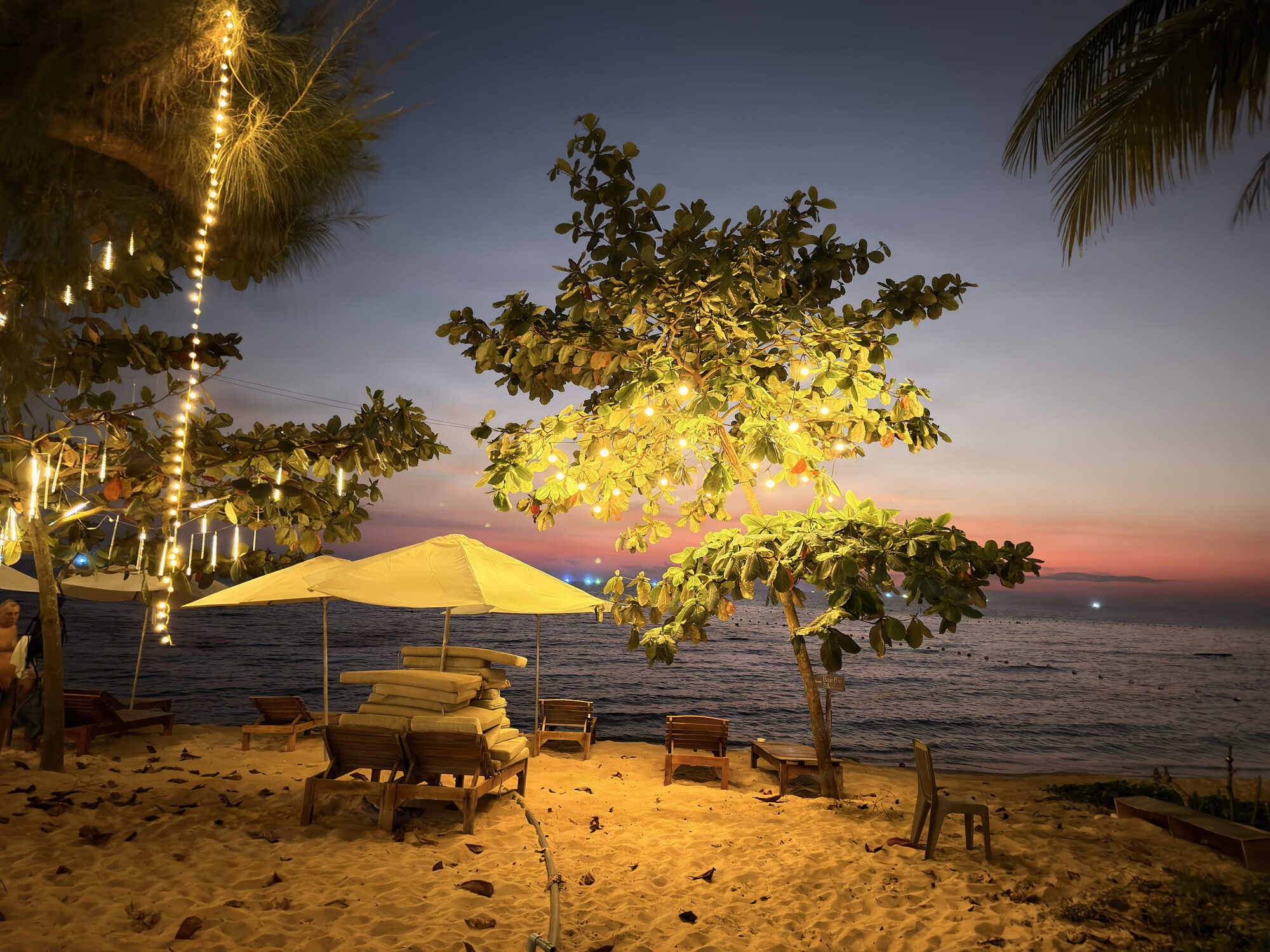
We rented two towels for 60k dong, ordered two Bivinas, bitter melon with egg, and fried fish. The place had exactly what we had been looking for - something simple, local, relaxed, and full of character. We loved it so much that we stayed long after sunset, had three more beers each and happy about our find, we went back to the hotel, passing all luxurious resort restaurants knowing that we had a much better evening ;)
The second place we found on our way from the Pepper Farm (below) when we searched for a sunset spot, quite a hidden place, family owned full of sunbeds and a nice piece of beach. These are the places we like to support. Not necessarily because they are perfect, or because “local” always has to mean plastic chairs and cheap beer, but because they still feel connected to the island and what it represents…
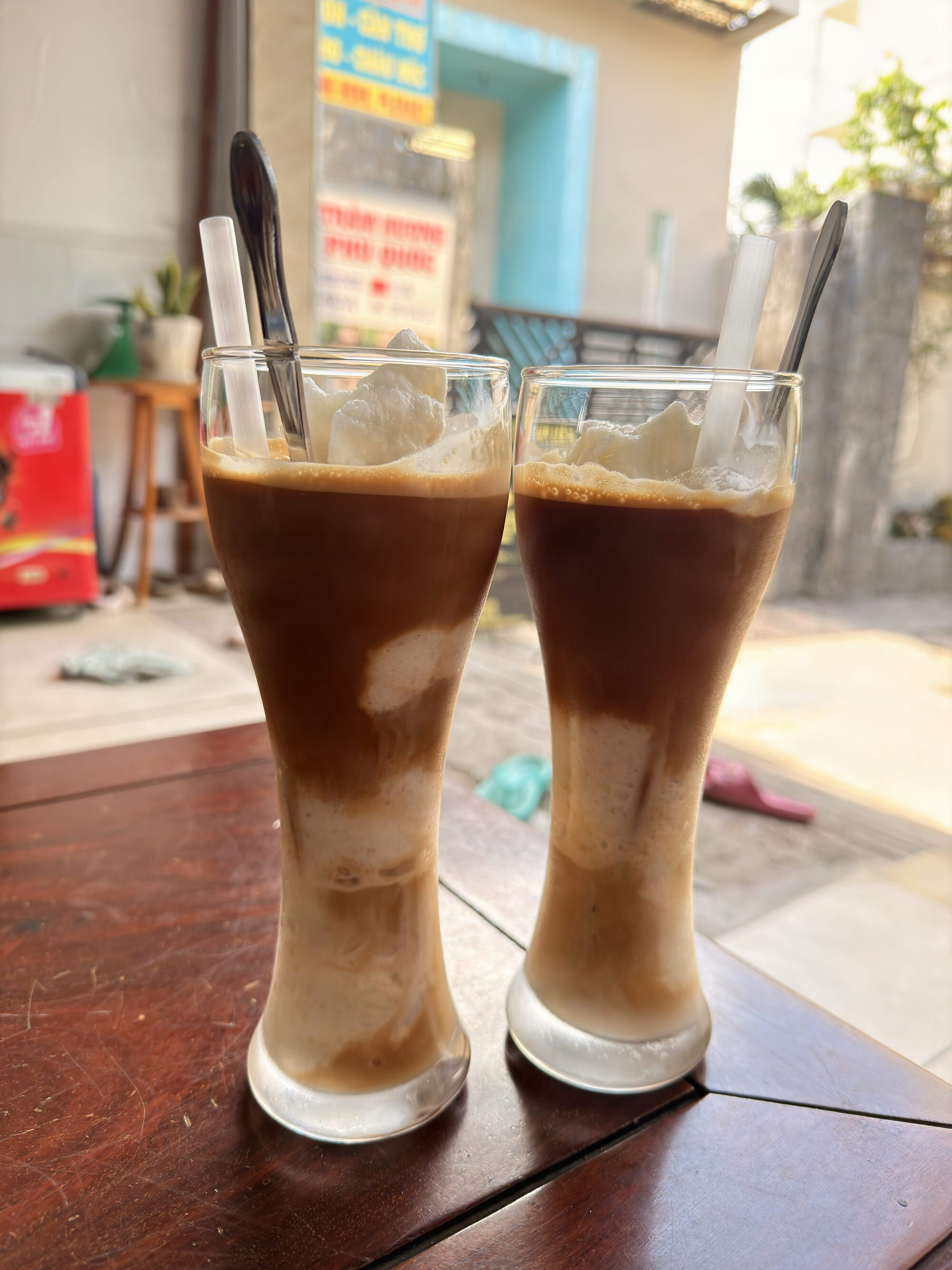
Kim and her amazing coconut coffee:
This lovely lady and her family literally made our mornings.
We stopped by for coffee every day. Sometimes we had two. Sometimes we had a smoothie bowl. Sometimes we just camped there for hours editing pictures. Kim is local, and in a very traditional way, she opens the doors to her living room and runs a little coffee shop from there. This was our go-to place during our last trip, so on day one we already knew exactly where to find proper morning coffee.
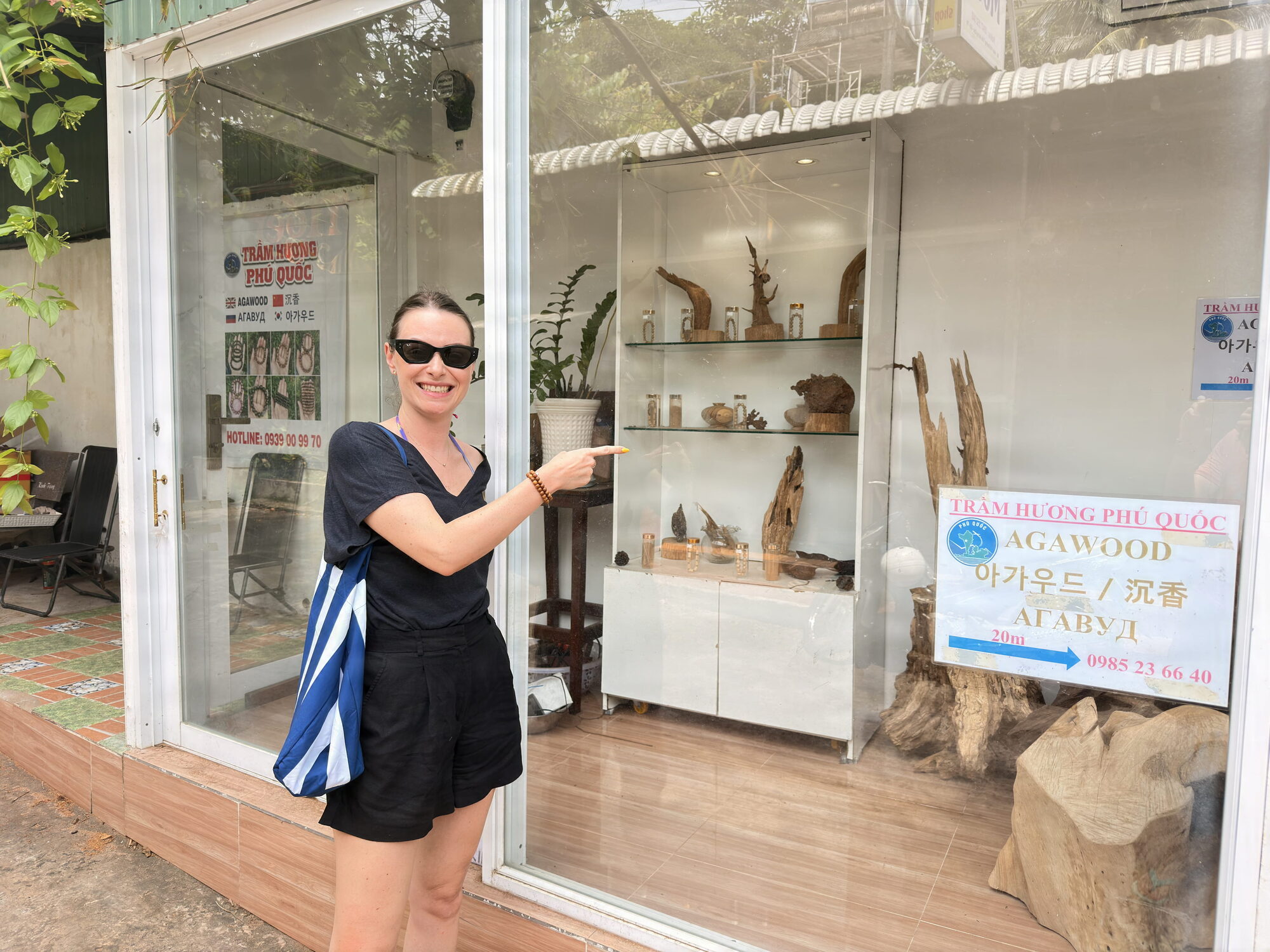
Kim greeted us like old friends. We spoke about how the last three years had been for us, and for her and her family. She agreed that the face of the island had changed a lot, and remembered the good old days when she used to play with her friends down by the beach, surrounded by forest and monkeys. We also learned that her husband is an incredibly skilled and sought-after agarwood artisan, making beautiful bracelets and other wooden art by hand. The place was exactly as we remembered it. At least some things don’t change.
Night market - parts of it:
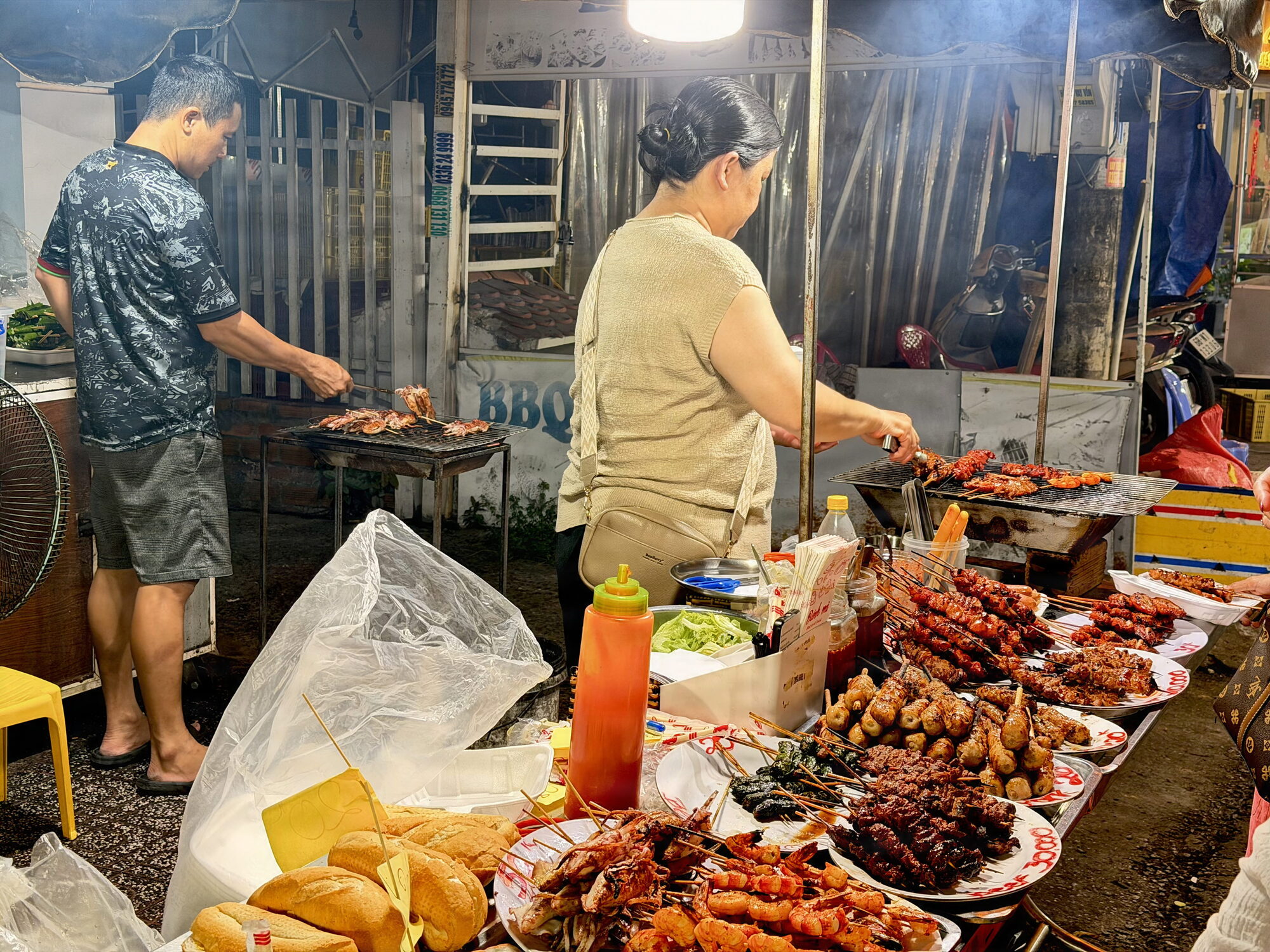
We remembered the night market as a vibrant, busy, local place filled with loud merchants, smoke from the grills, seafood tanks, fruit, noise, and the chaos that makes us love night markets everywhere.
Now, it feels a bit less traditional and a little less vibrant, but parts of it still have an atmosphere. The best food we had on the island came from nothing more than a grill, marinated meat skewers, betel leaves filled with minced beef, shrimps and vegetables, a cooling box with drinks, and a lady who clearly knew her way around fire. Funny enough, the restaurants around her were semi-empty to completely empty, while her stall was packed. Always a great sign. The food was delicious. Exactly what we wanted.
For dessert, we wandered around a little and found a cute stall with fresh fruit and coconut ice cream. We pointed at one of the coconuts, and the beautiful process has started in front of our eyes. I have been craving that ice cream ever since.
Pepper farm in the north of the island:
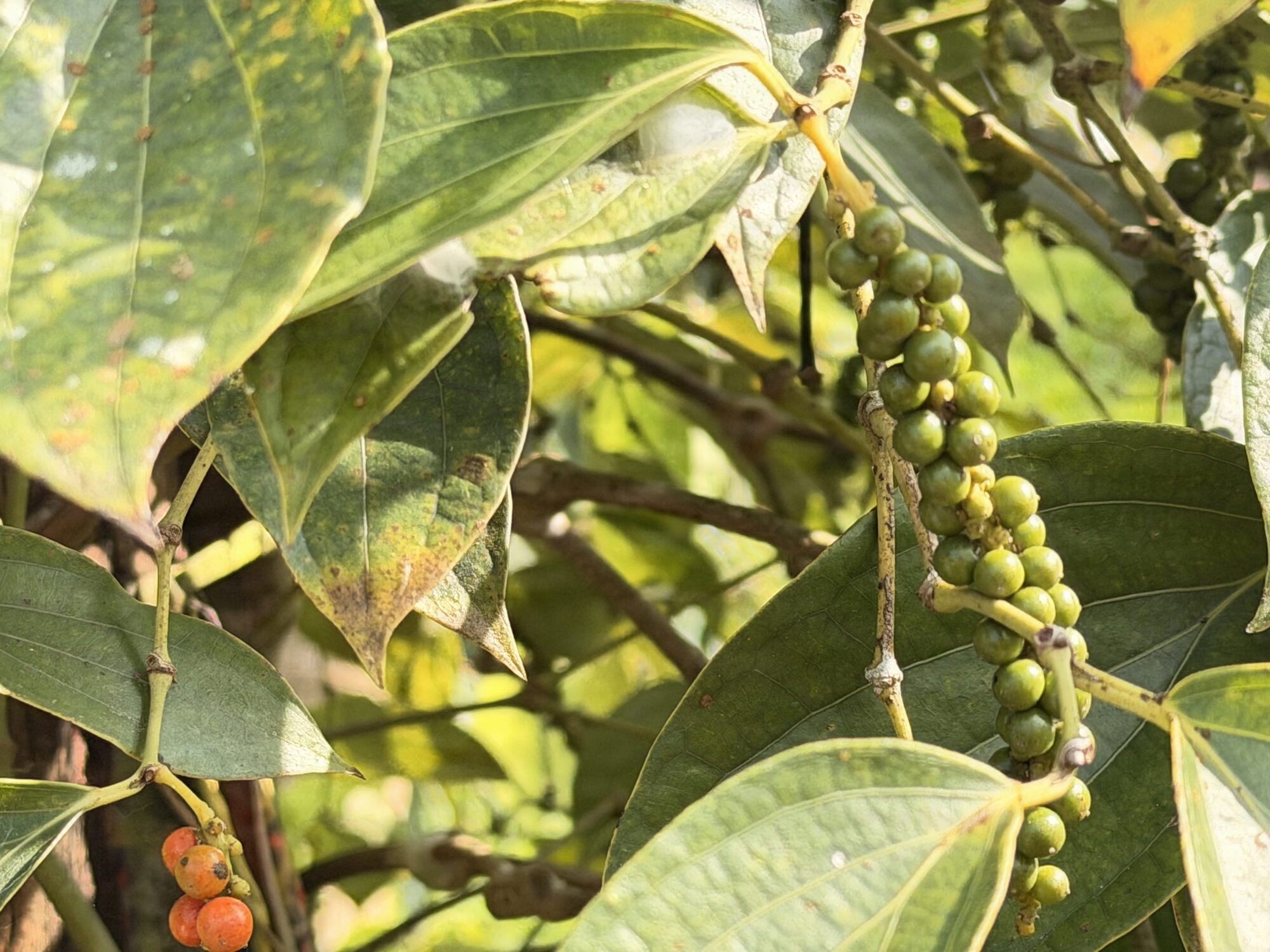
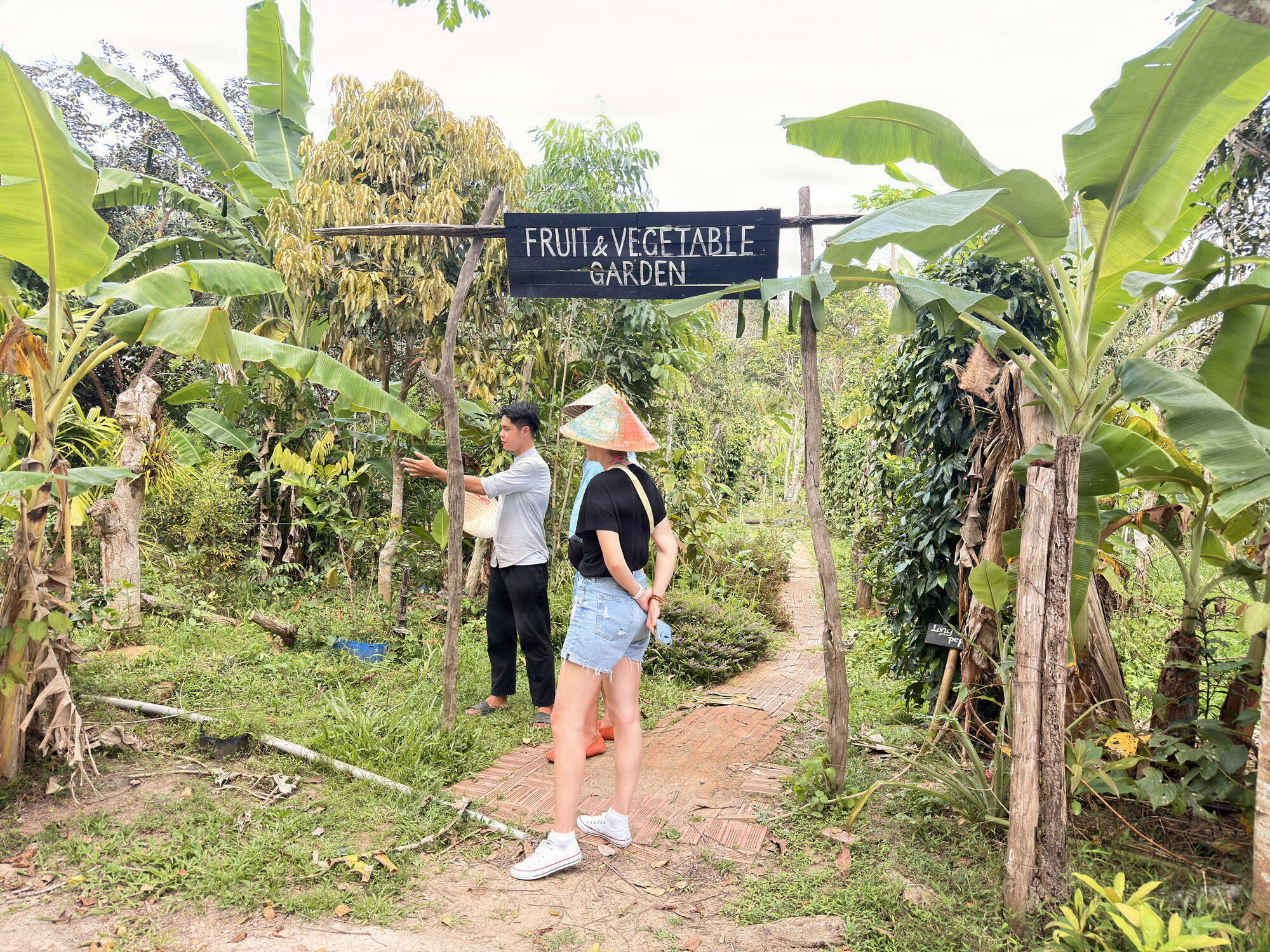
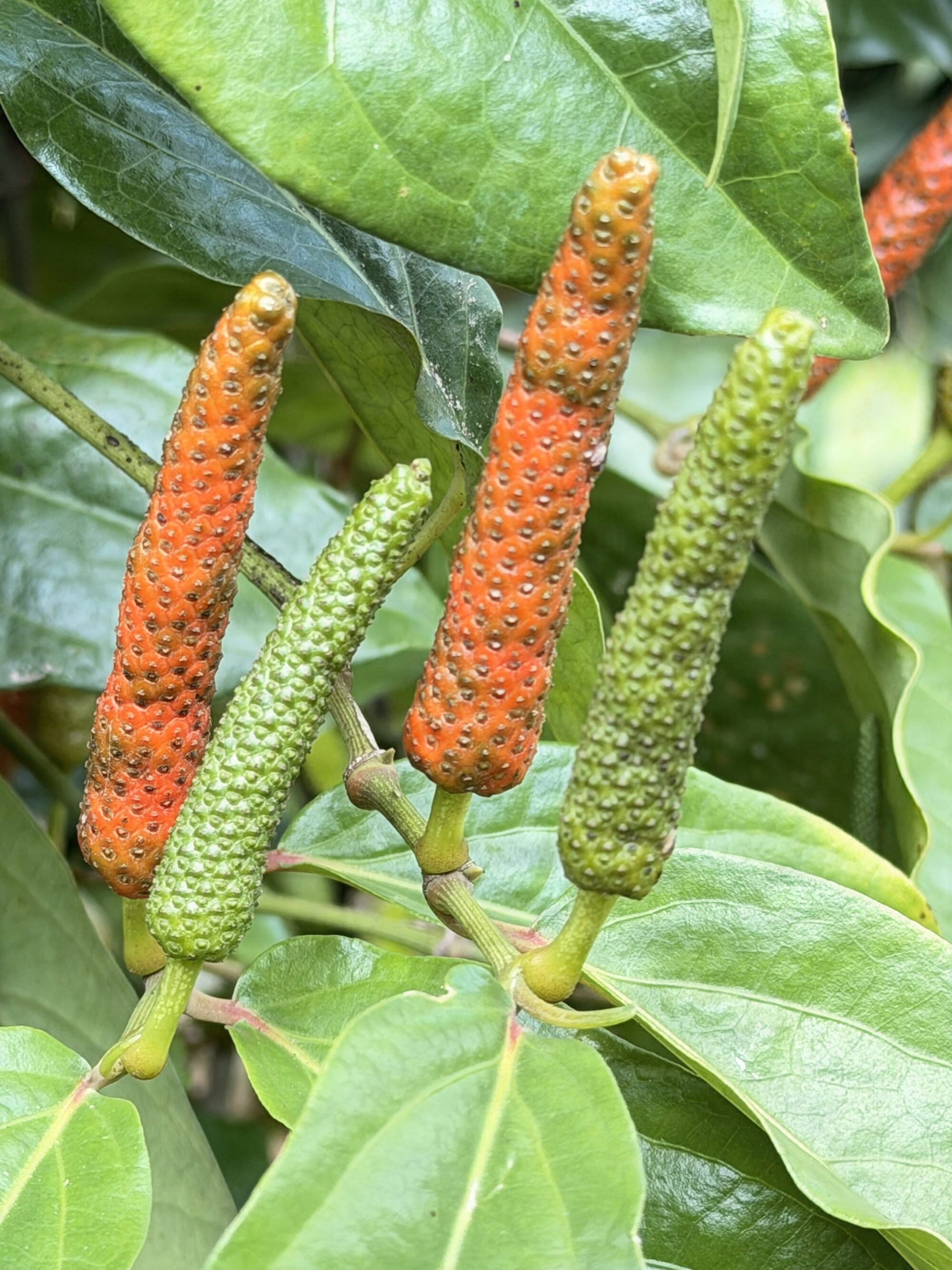
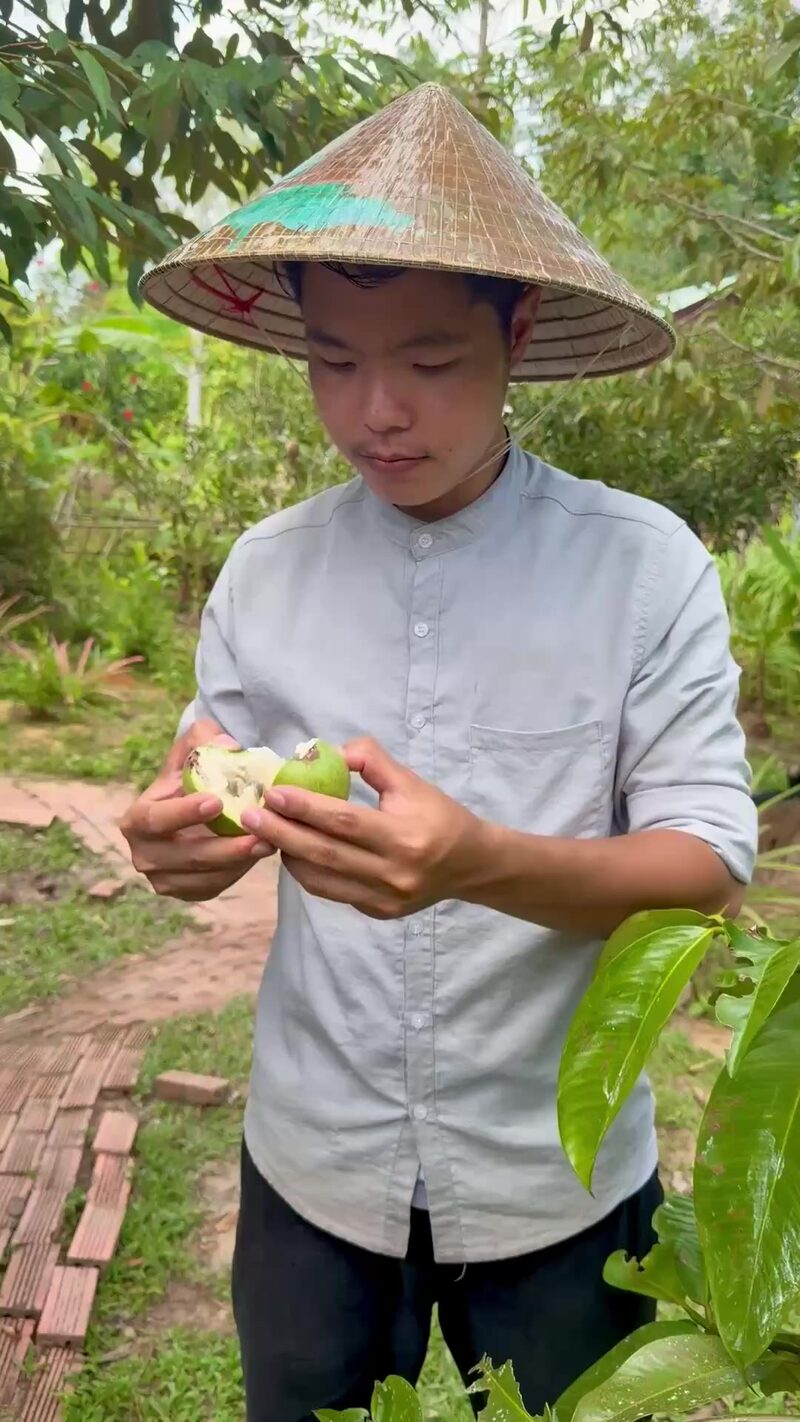
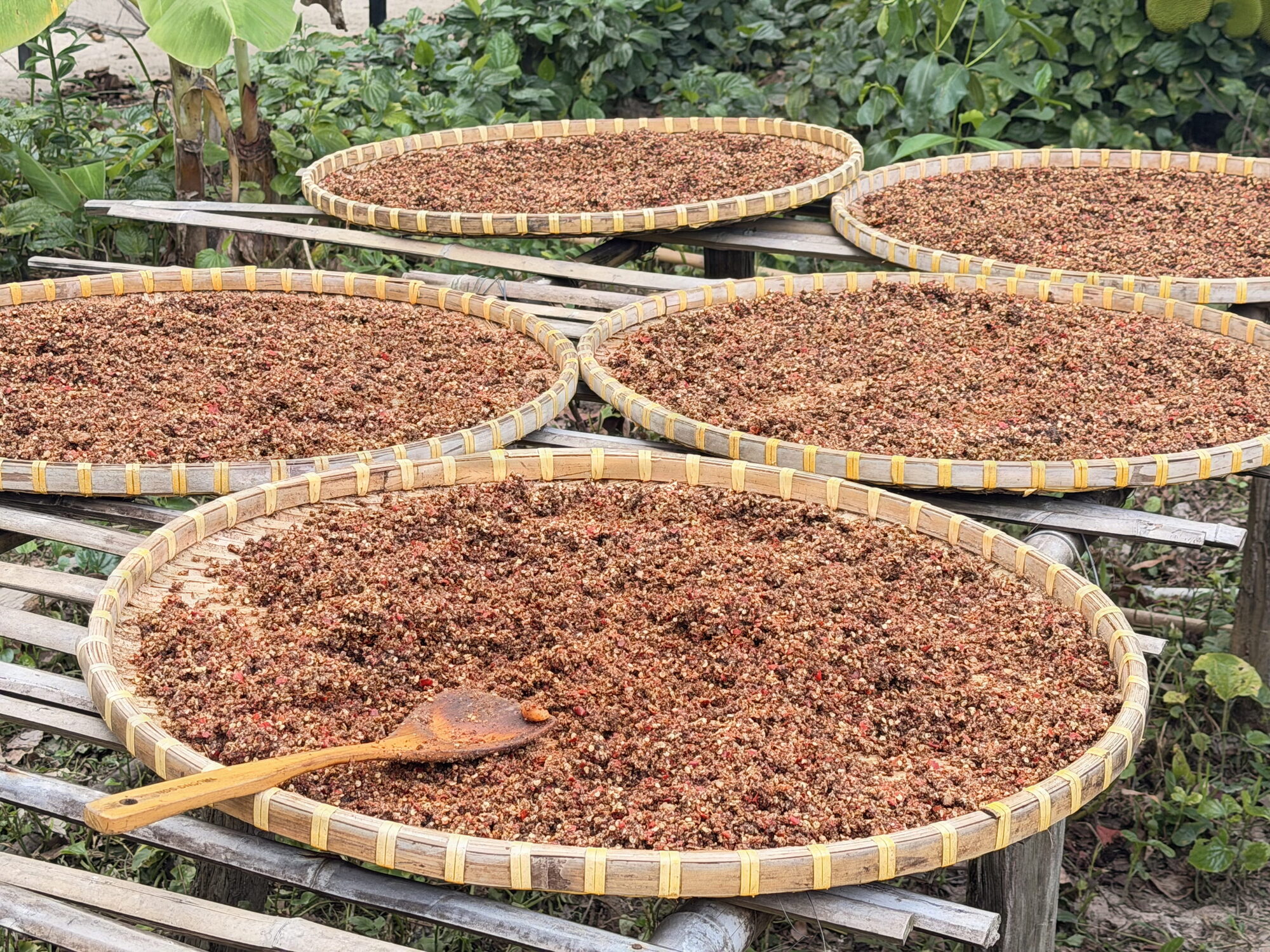
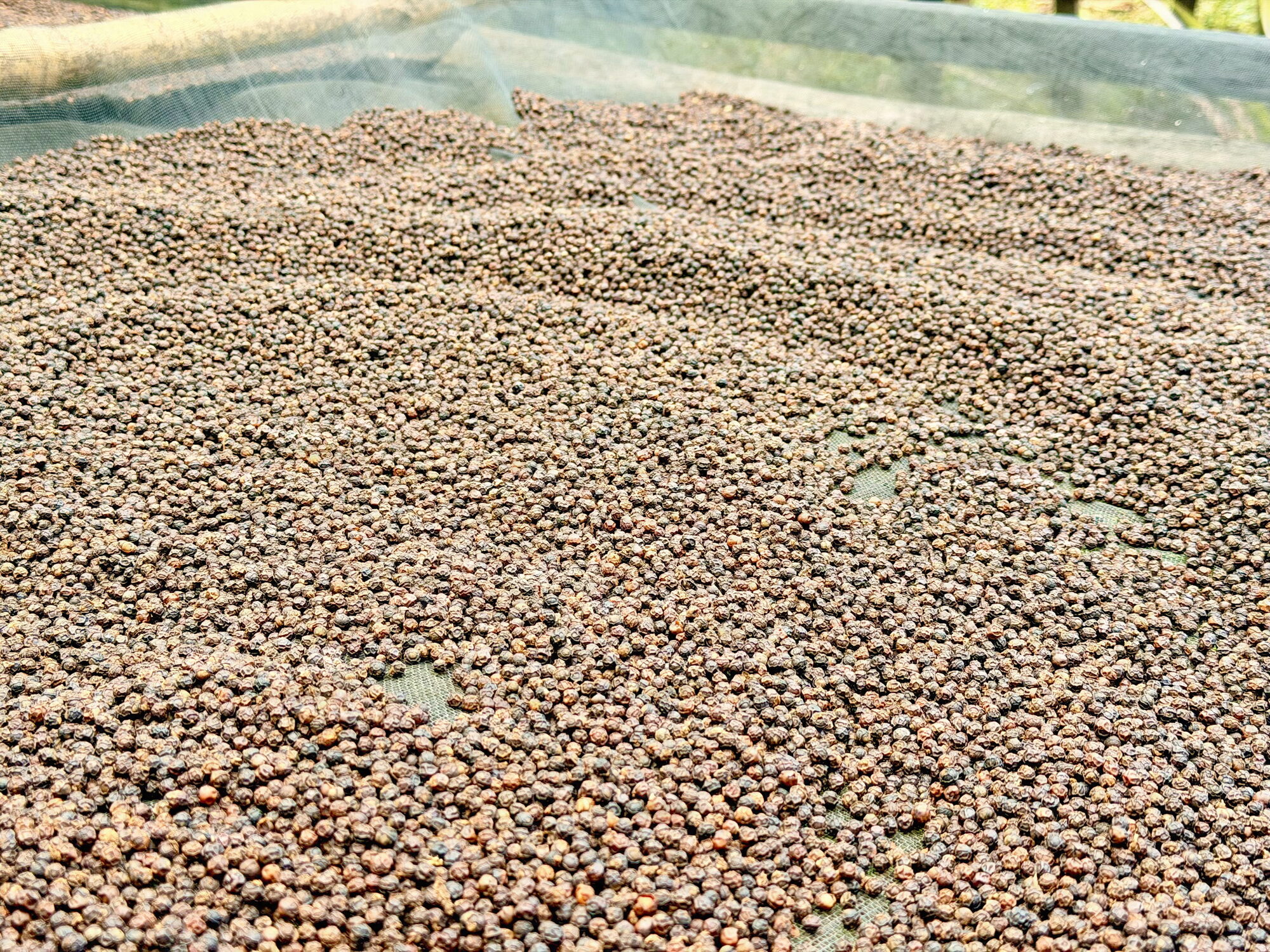
The pepper farm was definitely one of our highlights. It is a family-run business owned by a lady called Quynh. Her parents bought the farm in 1998, and she opened it to tourists in 2008, with the idea of sharing a bit of local culture, food, history, and Phú Quốc specialties, while keeping the farming simple and more mindful of the land. This is exactly the kind of touristy place we actually LOVE! Sure it’s made for visitors, there is a tour, a shop, products to buy, a cooking class, the whole package, but it’s a place that teaches you something, that supports something local and still feels connected to the island, which makes all the difference. We saw, we tasted, we learned, we shopped (honestly, the best black paper sauce we had, ever).And that’s the thing! Touristy doesn’t automatically mean bad. Sometimes it just means someone figured out how to make something local easy for visitors to understand. The pepper farm had the usual tourist ingredients, but it belonged there. It wasn’t pretending to be something else, and it didn’t feel like it had been dropped onto the island just to give people something to take pictures off. Maybe that became the theme of Phu Quoc for us: trying to find the places that still felt like they belonged to the island. The little cafés, the Bahn Mi stalls, the family-run businesses, the food cooked like 50 years ago, the conversations that are not part of a carefully curated experience.
They are still there.
You just have to look a little harder.
We also found the contradictions hard to ignore. Phu Quoc is beautiful, but it is also being aggressively transformed. There are developments too large for the roads that feed them, empty-looking resort zones, themed architecture dropped into the landscape like a dare, and beaches where construction noise competes with waves. We tried not to be smug about it. We were visitors too. Still, the island made us think about how quickly a place can be packaged, and how much of travel now involves looking for what has not yet been flattened into a product.









Leave the first one below
Join the conversation
No comments yet. Be the first to comment.